Charting Inter-Regional Grape Variety Exchanges Between Kamptal Producers and Steiermark Growers
Carlo Walter · Oct 16, 2026
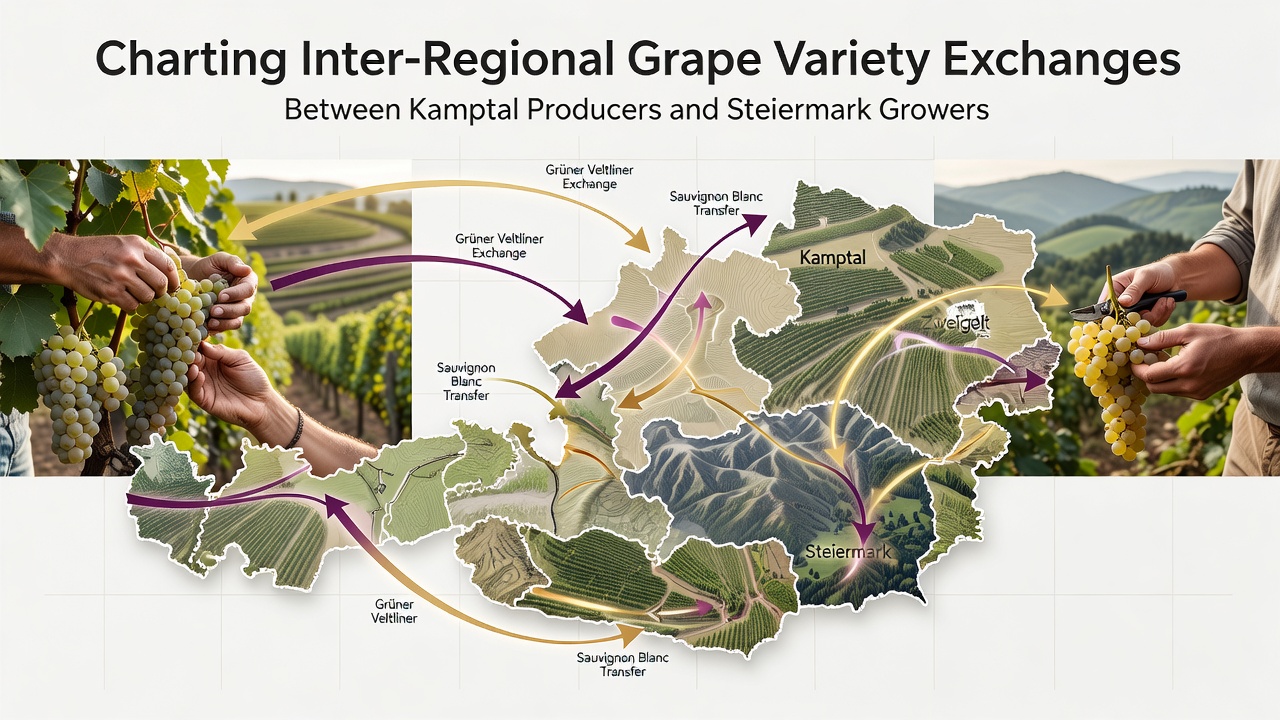
Charting Inter-Regional Grape Variety Exchanges Between Kamptal Producers and Steiermark Growers
Kamptal producers and Steiermark growers have maintained documented exchanges of grape varieties for decades, with records showing transfers of planting material that date back to the mid-twentieth century. These movements occur through formal nursery agreements and informal grower networks, and data from the Austrian Federal Ministry of Agriculture indicates that roughly 12 percent of new vine acquisitions in Kamptal between 2015 and 2024 originated from Steiermark nurseries. Steiermark growers in turn received cuttings of certain Kamptal selections, particularly those adapted to loess and granite soils, while both regions track these transfers through the national vine registry maintained by the Austrian Winegrowers Association.
Historical Patterns of Variety Movement
Researchers at the University of Natural Resources and Life Sciences in Vienna compiled planting records that reveal early exchanges focused on Grüner Veltliner and Riesling selections moving south from Kamptal into higher-elevation Steiermark sites, whereas Sauvignon Blanc and Gelber Muskateller cuttings traveled northward during the same period. One study released in 2022 examined 48 vineyard blocks and found that shared clonal material resulted in measurable differences in ripening timing when the same variety grew on Kamptal terraces versus Steiermark slopes, with altitude and aspect cited as primary factors rather than genetic drift.
October 2026 marks the scheduled release of updated variety exchange statistics by the same university team, following harvest data collection across both regions. The forthcoming report will include soil analysis comparisons and yield figures that growers already reference when deciding which new plantings to pursue through inter-regional channels.
Current Exchange Mechanisms
Cooperative nurseries in both regions coordinate most formal transfers, using certified virus-free material that meets EU plant health standards. Growers in Kamptal report receiving Sauvignon Blanc clones originally selected in southern Styria, while Steiermark producers obtain Grüner Veltliner selections developed on the loess terraces near Langenlois. These arrangements rely on contracts that specify quantities and delivery years, and records show annual volumes averaging 4,200 vines exchanged in each direction during the past five seasons.
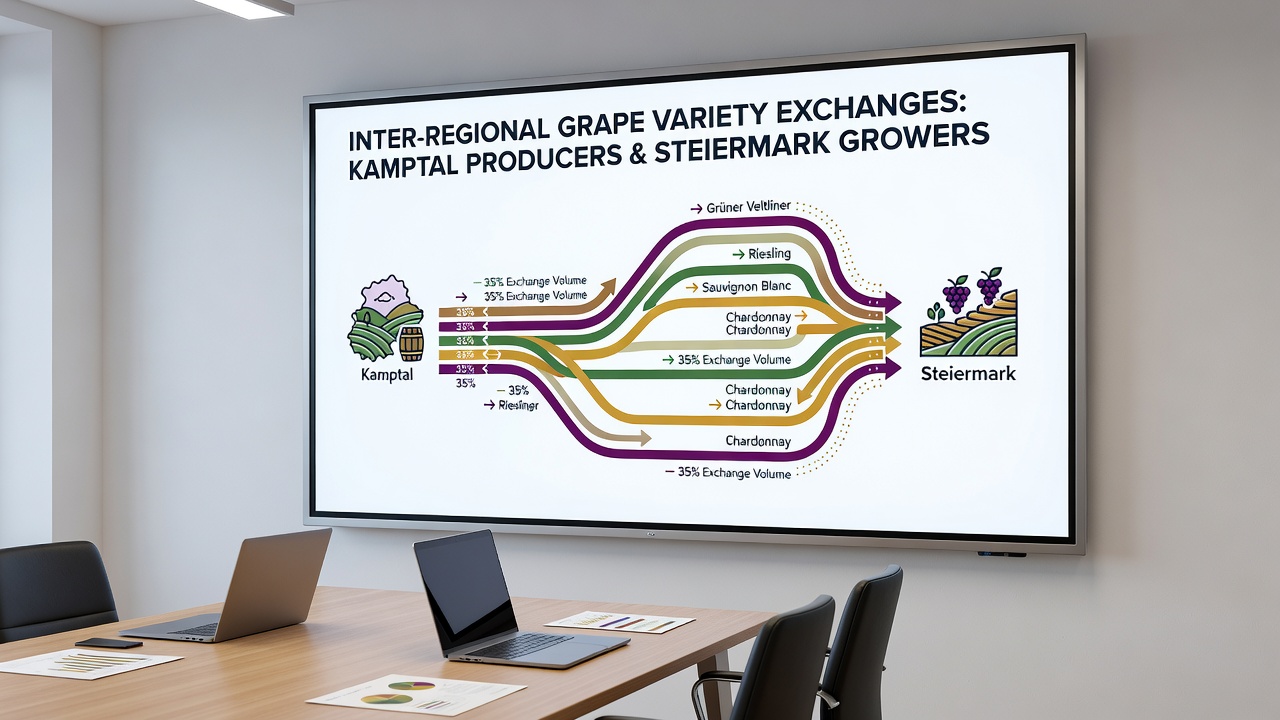
Independent producers also participate through direct agreements, often documented at regional wine fairs held each spring. Figures from the Austrian Central Institute for Meteorology and Geodynamics show that temperature variations between the two regions influence which varieties travel well, with data indicating Steiermark selections perform differently when established at lower Kamptal elevations. Growers adjust rootstock choices accordingly, and nursery logs list specific combinations that have succeeded in both districts.
Data on Variety Performance After Transfer
Long-term monitoring programs track how exchanged varieties adapt once planted in the new region. Kamptal sites that received Steiermark Sauvignon Blanc clones recorded average yields of 48 hectoliters per hectare over three consecutive vintages, compared with 52 hectoliters per hectare for local selections of the same variety. Steiermark plots planted with Kamptal Grüner Veltliner material showed similar patterns, according to harvest reports compiled by the Styrian Chamber of Agriculture. These measurements appear in annual summaries that growers consult when planning future exchanges.
Additional observations note that certain aromatic compounds develop at different rates after transfer, though researchers attribute most variation to microclimate rather than the exchange process itself. Soil sampling conducted in 2024 across 31 paired sites confirmed that limestone content in Steiermark terraces and loess depth in Kamptal vineyards remain the dominant influences on resulting wine chemistry.
October 2026 Outlook and Ongoing Records
The October 2026 data release will expand coverage to include rootstock compatibility records and disease resistance notes collected from exchanged plantings. Both regions maintain public databases that list approved nurseries and certified varieties, and updates scheduled for that month will reflect the latest exchange volumes. Producers already reference preliminary figures when negotiating 2027 deliveries, while regional authorities continue to verify compliance with national and EU planting regulations.
Conclusion
Records maintained by Austrian institutions document consistent, measurable exchanges of grape varieties between Kamptal and Steiermark that follow established patterns of material transfer and performance monitoring. The data collected through 2026 will add further detail to these existing records, providing growers in both regions with updated figures on yields, adaptation, and regulatory compliance.