Community Cooperatives Preserving Historic Pressing Techniques Across Burgenland's Neusiedlersee Zone and Steiermark's Southern Terraces
Casey Beck · Sep 4, 2026
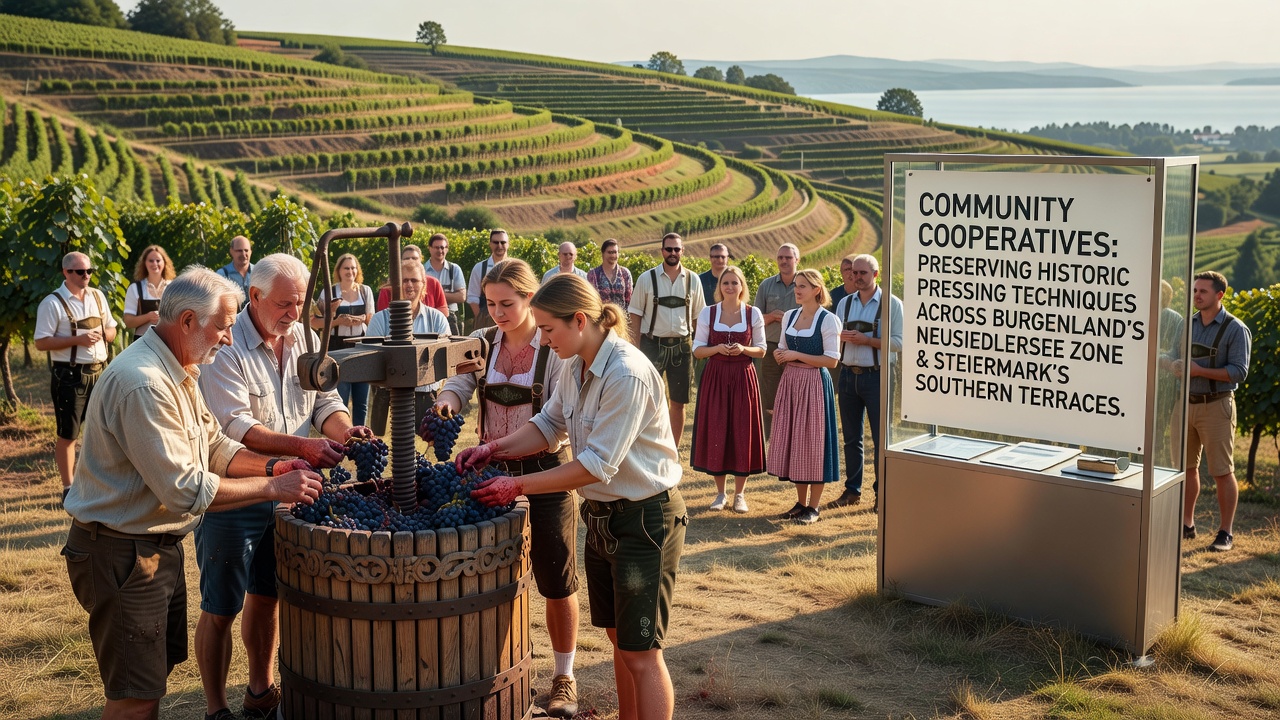
Community Cooperatives Preserving Historic Pressing Techniques Across Burgenland's Neusiedlersee Zone and Steiermark's Southern Terraces
Community cooperatives in Austria's eastern wine regions maintain longstanding pressing methods that rely on manual and mechanical systems developed over centuries, and these groups operate across Burgenland's Neusiedlersee Zone as well as Steiermark's Southern Terraces where smallholder vineyards still supply grapes to shared facilities. Records from regional agricultural offices show that more than thirty cooperatives continue to use wooden basket presses and horizontal screw mechanisms alongside newer pneumatic systems, yet the older equipment receives priority during certain harvest windows to preserve juice extraction profiles tied to specific grape varieties.
Regional Distribution of Cooperative Facilities
Data collected by the Austrian Chamber of Agriculture indicate that Neusiedlersee cooperatives cluster around communities such as Gols and Illmitz while Southern Terrace operations center near Ehrenhausen and Leibnitz, and both areas report steady membership numbers that have held between 2018 and 2025. These organizations pool resources for equipment maintenance because individual estates rarely possess the capital required to restore century-old presses constructed from local oak and iron fittings.
Techniques Retained Through Shared Infrastructure
Historic pressing sequences begin with whole-cluster loading into vertical basket frames, followed by gradual pressure application that extends over several hours rather than the rapid cycles common in modern tank systems, and cooperative schedules allocate dedicated days for these slower runs so members can monitor free-run juice separately from pressed fractions. Studies compiled by the University of Natural Resources and Life Sciences Vienna document measurable differences in phenolic extraction when basket methods process varieties such as Blaufränkisch and Sauvignon Blanc, results that cooperatives reference when planning annual production calendars.
Equipment inventories maintained by the cooperatives list more than forty operational basket presses distributed between the two regions, each restored through member contributions and occasional grants from provincial heritage programs. Technicians trained in traditional joinery replace worn staves and seals annually, a practice that keeps the machines functional without altering their core mechanics.
Harvest Coordination and September 2026 Outlook
Planning meetings held each spring establish rotation schedules that align with grape maturity forecasts issued by meteorological stations in both Burgenland and Steiermark, and the upcoming 2026 season includes an expanded demonstration program scheduled for mid-September to accommodate visiting researchers and students. Cooperative records show that participation in these events has grown steadily since 2022, reflecting increased interest in documentation of manual pressing logs that record tonnage, duration, and yield percentages.
Knowledge Transfer Across Generations
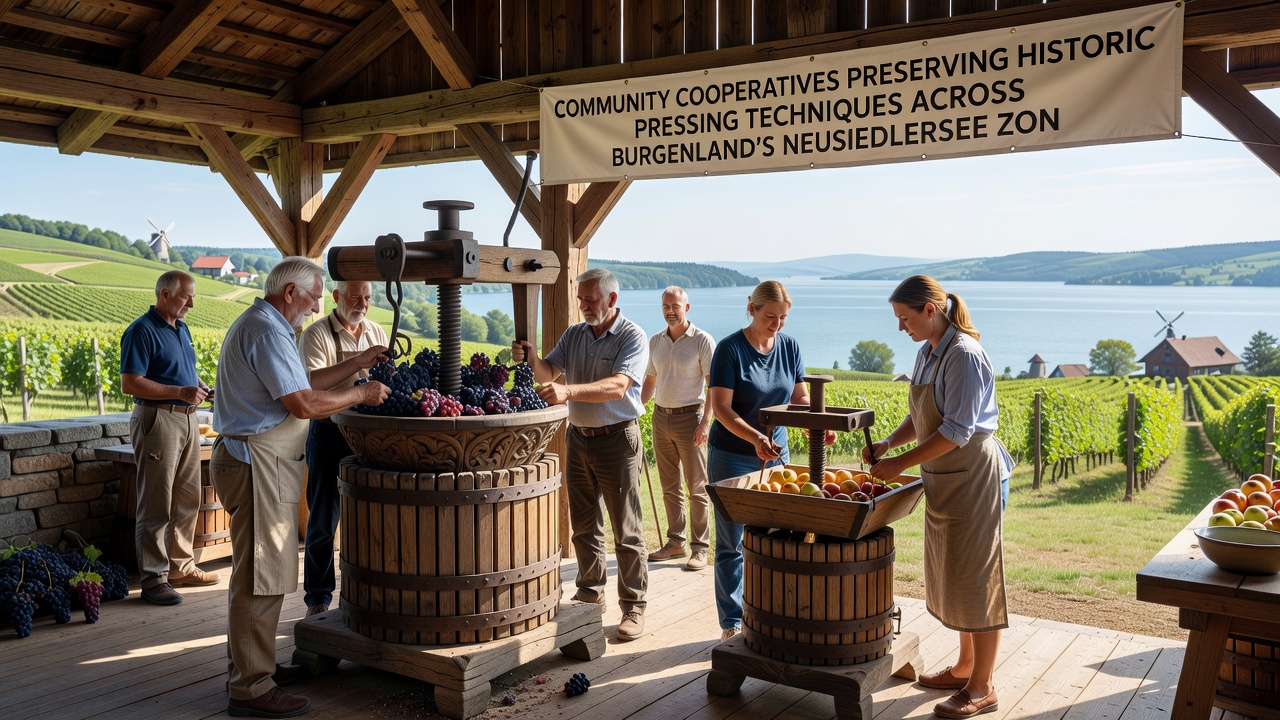
Apprenticeship programs pair younger members with experienced operators who demonstrate correct stacking patterns inside basket frames and adjustment of pressure plates to avoid seed breakage, and written manuals compiled by the cooperatives supplement hands-on instruction with diagrams that detail torque settings for screw mechanisms. Attendance figures from training sessions held between 2023 and 2025 exceed two hundred participants across both regions, according to internal cooperative reports.
Soil and climate data collected through long-term monitoring plots maintained near cooperative sites reveal that Neusiedlersee parcels often feature sandy loams with higher limestone content while Southern Terrace vineyards sit on steeper slopes with more pronounced gravel layers, and these distinctions influence how cooperatives time the transition from basket to pneumatic presses within a single vintage. Cross-regional exchanges organized every other year allow operators to compare pressing outcomes under the differing conditions.
Documentation and Archival Efforts
Cooperatives have begun digitizing handwritten pressing ledgers that date back to the early twentieth century, creating searchable databases that link specific press types to resulting wine analyses stored at provincial laboratories. Funding for these projects has come partly from European Union rural development allocations that prioritize preservation of traditional agricultural knowledge, and preliminary results from the digitization work were presented at an agricultural history conference in Graz during 2024.
Conclusion
Continued operation of these community cooperatives depends on sustained membership levels and access to maintenance expertise, factors that regional authorities track through annual surveys. The combination of shared equipment, structured training, and scheduled public events positions the Neusiedlersee and Southern Terrace groups to maintain pressing methods that originated well before mechanized alternatives became widespread, ensuring that data on extraction rates and juice characteristics remain available for future comparative studies.