Uncovering Seasonal Fog Patterns and Their Documented Effects on Ripening Cycles in Wachau and Adjacent Kremstal Territories
Carlo Walter · Nov 13, 2026
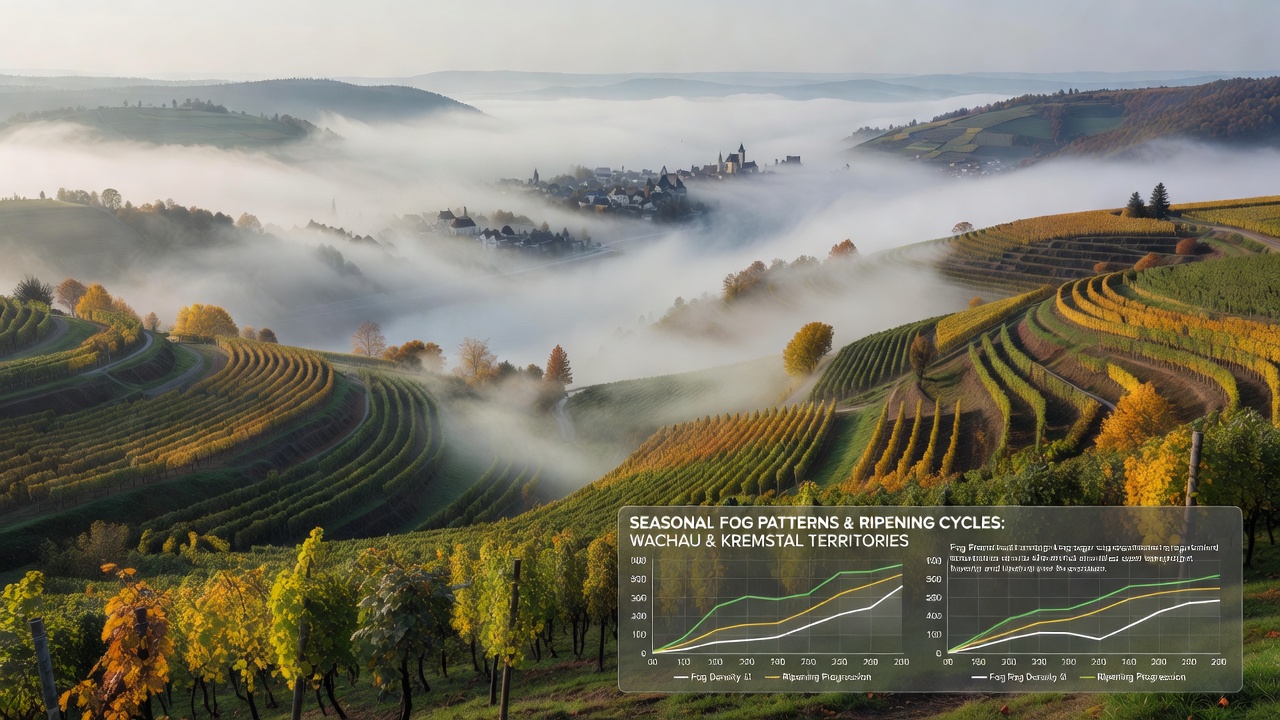
Uncovering Seasonal Fog Patterns and Their Documented Effects on Ripening Cycles in Wachau and Adjacent Kremstal Territories
Seasonal fog forms regularly along the Danube corridor through Wachau and Kremstal where cool air masses settle overnight in the river valleys while warmer slopes retain heat longer and this temperature differential drives the documented movement of moisture upward from the water surface into the lower vineyard elevations each autumn.
Fog Formation Mechanisms in the Region
Monitoring stations operated by regional agricultural authorities record fog events most frequently between late September and mid-November when river temperatures remain higher than surrounding air and calm wind conditions allow the vapor to persist for several hours after sunrise while data collected over multiple decades show these patterns intensify in narrower sections of the valley where the river bends create natural traps for cool air.
Researchers at Austrian viticulture institutes have mapped these events using satellite imagery combined with ground sensors and their findings indicate that Kremstal experiences slightly longer fog duration on average compared with central Wachau because its broader terraces allow more extensive pooling of humid air yet both territories share the same underlying driver of nocturnal radiative cooling over the Danube.
Documented Impacts on Grape Ripening Cycles
Extended fog cover reduces direct solar radiation reaching the grape clusters during critical ripening phases and this reduction slows sugar accumulation while preserving higher acidity levels according to measurements taken at estates that maintain long-term phenological records. Studies conducted across multiple vintages demonstrate that parcels experiencing more than four consecutive hours of morning fog in October show delayed veraison by up to five days compared with fog-free control sites on higher slopes.
Those same records reveal that fog also moderates temperature spikes during the day because the moisture layer reflects incoming sunlight and thereby prevents rapid warming that could otherwise accelerate ripening unevenly across clusters. In Kremstal where many vineyards sit at lower elevations the effect appears more pronounced with harvest dates shifting later in years when fog frequency exceeds the thirty-year average.
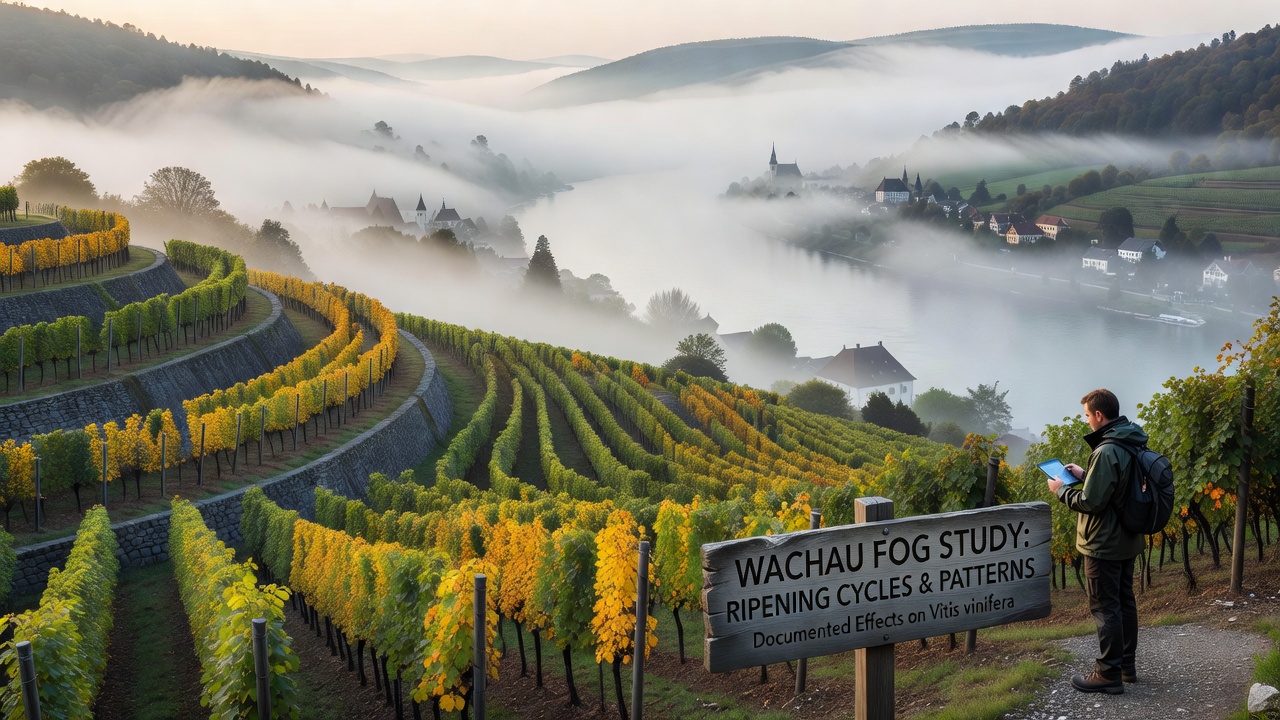
Regional Variations Between Wachau and Kremstal
Wachau's steep terraced sites experience shorter fog persistence because air drains more rapidly down the slopes once the sun rises whereas Kremstal's gentler topography allows fog to linger and this difference translates into measurable variations in final grape composition with Wachau samples typically showing slightly higher potential alcohol yet Kremstal fruit retaining elevated malic acid content into late harvest.
Cooperative monitoring programs that began expanding in 2022 now include automated weather stations positioned at multiple elevations in both territories and preliminary outputs scheduled for release in November 2026 will provide the first multi-year dataset linking fog duration directly to berry weight and phenolic development across Grüner Veltliner and Riesling blocks.
Integration of Historical Records and Current Observations
Archival harvest logs maintained by long-established estates date back to the nineteenth century and entries from those periods note frequent delays in ripening during foggy autumns although the language used differs from modern scientific terminology the patterns align closely with contemporary sensor data. Current observers combine these historical notes with satellite-derived fog maps to identify consistent hotspots where fog forms earliest each season.
One analysis of thirty-five vintages found that years with above-average fog hours correlated with reduced incidence of sunburn on exposed clusters and this protective effect appears strongest on south-facing Wachau terraces that otherwise receive intense afternoon sun. The same dataset shows no significant correlation with disease pressure because the fog dissipates before midday humidity levels rise enough to promote fungal growth.
Conclusion
Documented fog patterns in Wachau and Kremstal continue to shape ripening timelines through reduced sunlight exposure and moderated daytime temperatures with ongoing sensor networks expected to deliver refined models by late 2026. Regional differences between the steeper Wachau terraces and the broader Kremstal sites produce distinct outcomes in sugar-acid balance that producers track through systematic records. These measurable interactions remain central to understanding vintage variation across both territories.